Why Harpsichord Music Is Full of Ornaments
If you’ve looked at a page of French harpsichord music, you’ve seen the little signs hovering over the notes. Squiggles, crosses, slashes, commas. Piano students often treat them as decoration to be added once the notes are secure, and then they get tossed off quickly and lightly. On the harpsichord, ornaments did a job that the player’s touch could not do, and knowing that job changes how you play them on the piano.
How a Harpsichord Makes Sound
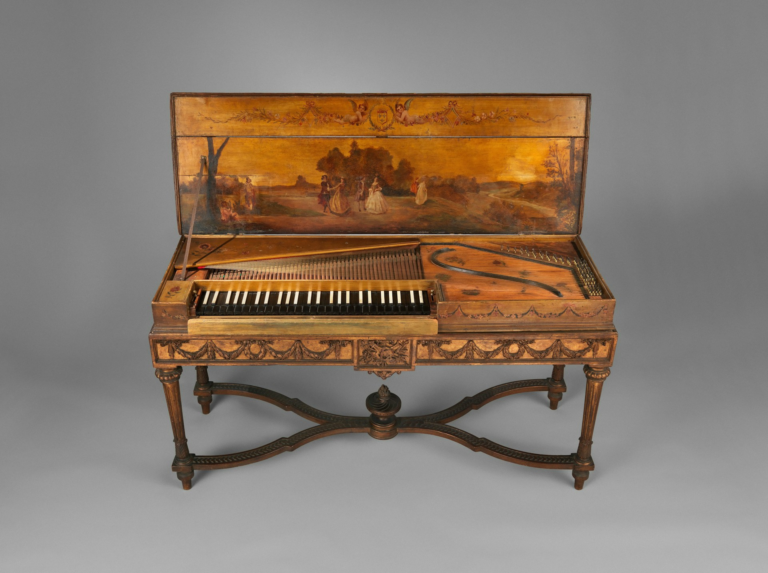
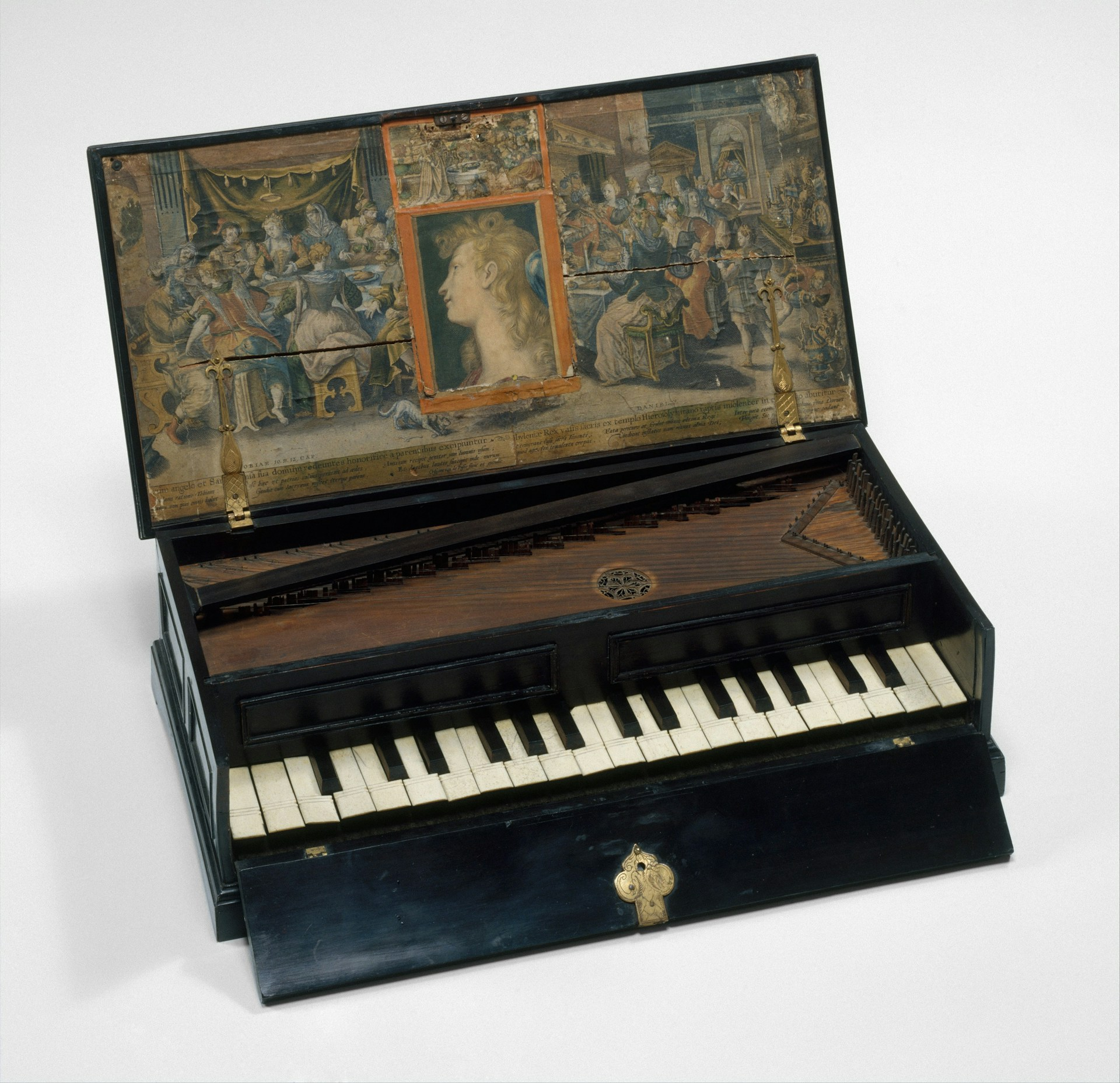
Press a harpsichord key and a small wooden shaft called a jack jumps up. A quill plectrum on the jack plucks the string. Release the key and a felt damper drops back onto the string and stops it. Gordon, in his history of keyboard literature, puts the consequence simply. Nothing the player did at the key could change how loud or what color the note was.
At the piano, a faster key gives you a louder sound. At the harpsichord, you can put all the arm weight in the world into the key and the string is plucked the same way every time. Your fingers control when a note starts and when it stops. That’s all.
Terraced Dynamics
The instrument did have some tools. Harpsichords were often built with two manuals, sometimes three, and with stops that brought different combinations of strings into play. Moving between manuals or changing stops changed the volume and color all at once. That produced what Gordon calls terraced dynamics, where loud and soft sections line up with the structure of the piece. On many older instruments, though, the stops were nearly out of the player’s reach, so there was no changing them in the middle of a piece.
A gradual swell was impossible, and so was leaning on one note inside a phrase. The shaping of a line fell to the fingers. Gordon says careful phrasing and a nonlegato touch became very important for projecting melodic lines and phrase shapes, and that ornaments were used for stressing important notes.
Ornaments as Emphasis
An ornament on a harpsichord says this note matters. A trill on a long note keeps the sound alive after the pluck has died away. A mordent or a turn adds a little burst of activity to a note, and the ear hears that as emphasis. Where a pianist would play the note louder, a harpsichordist gave it more notes.
Articulation did the rest. When every note sounds with the same strength, the length of a note and the space after it are what shape a phrase. Holding a note slightly longer, or releasing it a little early, tells the listener where a phrase leans and where it breathes.
Why Composers Printed Ornament Tables
Composers could not count on every player knowing what each sign meant, so they began printing explanations. Gordon reports that Chambonnières, whom he calls the founder of the seventeenth-century clavecin school, published thirty suites in Paris in 1670 with a table of ornaments to help the performer, and that the practice was followed by many composers after him. His student d’Anglebert, whose florid and heavily ornamented style Gordon describes, published an ornament table in 1689. Bach copied d’Anglebert’s table by hand, which tells you how useful these tables were to musicians outside France.
I walked through Rameau’s ornament table in an earlier post, so I won’t repeat the signs here. These composers took the trouble to explain their ornaments in print because the ornaments were part of how the music was meant to sound. Gordon notes one exception. Froberger indicated no ornamentation at all and left the matter entirely to the performer, which suggests players were expected to supply it.
Playing These Ornaments on the Piano
The piano has dynamics, so you can lean on an important note without adding anything to it. The ornaments still belong, though. They are part of the line, and the line sounds thinner without them.
The most common mistake is to treat an ornament as fast decoration squeezed in ahead of the beat. In most Baroque music the ornament starts on the beat and fits inside the rhythm, so the ear still hears the main note arrive where it should. A trill that starts early or races pulls the line apart. An ornament with a clear rhythm and a lighter touch than the note it decorates makes the same line sound alive.
The Research
Gordon’s A History of Keyboard Literature opens with a chapter on stringed keyboard instruments, covering how the clavichord, harpsichord, and piano each produce sound and what that meant for the music written for them. Its chapter on the Baroque follows the French clavecin school from Chambonnières through his students, including the printed table of ornaments and the heavy ornamentation of d’Anglebert’s style.
What This Means for Your Practice
Practice ornaments slowly and in rhythm. Set a metronome at a pace where you can play the ornament and the main note without rushing, and count aloud until you know exactly where each note of the ornament lands.
Decide where each ornament starts before you play it. Usually the answer is on the beat, with the main note arriving where it would have without the ornament. Pencil your decision into the score so you aren’t remaking it at every practice session.
Play the ornament lighter than the main note, and think about touch rather than volume. Use a quick, light finger action for the small notes and a clean arrival on the note they lead to. If you want the note to stand out, use articulation. A slightly longer hold or a slightly earlier release shapes the phrase the way a harpsichordist would have, and it works on the piano too.
References
Gordon, Stewart. 1996. A History of Keyboard Literature. New York: Schirmer Books. Chapters 1 and 3.
Ready to start piano lessons?
Private lessons for ages 4 through adult, beginner through advanced, at Piano Distributors in Clearwater, an easy drive from Palm Harbor, Safety Harbor, and Oldsmar.
Questions first? Call or text (727) 625-0624 or email hello@pianojil.com. Planning a party or event? Book live piano.