What Kind of Piano or Keyboard Do You Need to Start Lessons?
This is one of the first questions I get from new families, and it usually arrives with a note of apology attached, as though wanting to start on something affordable were a character flaw. It isn’t. You do not need to spend a fortune to start piano lessons. But the instrument you practice on shapes everything about how you learn, and there is a real difference between an instrument that is inexpensive and one that will actively hold you back.
Here is the honest answer, including what I tell my own students in Clearwater when they ask me what to buy.
The instrument must have 88 keys. Real piano music uses the full range of the keyboard, and if yours stops at 61, you will run out of keys within the first few weeks. It is the difference between learning guitar on a guitar and learning guitar on a ukulele. Both are instruments. They are not the same instrument.
Weighted, hammer-action keys are what make technique develop correctly. On an acoustic piano, the keys push back when you press them. That resistance is not a design accident; it is what teaches your fingers to develop strength and control. On an unweighted keyboard, the kind that feels like typing on a computer, your fingers never have to work, so they never build strength. When you eventually sit down at a real piano, very little of what you practiced transfers.
Touch sensitive keys are needed so your music can sing. This means the instrument responds to how you play it. Press gently and the sound is quiet. Press with weight and it gets louder. If your keyboard cannot do this, you cannot learn dynamics, and dynamics are most of what makes music sound like music rather than like a sequence of correct notes.
You can’t learn to swim in a kiddie pool. You could splash around happily, but you would never develop a real stroke, because the pool itself prevents it. A keyboard that cannot do what a piano does works the same way. You are not practicing wrong; the instrument has put a ceiling on what practicing can accomplish.
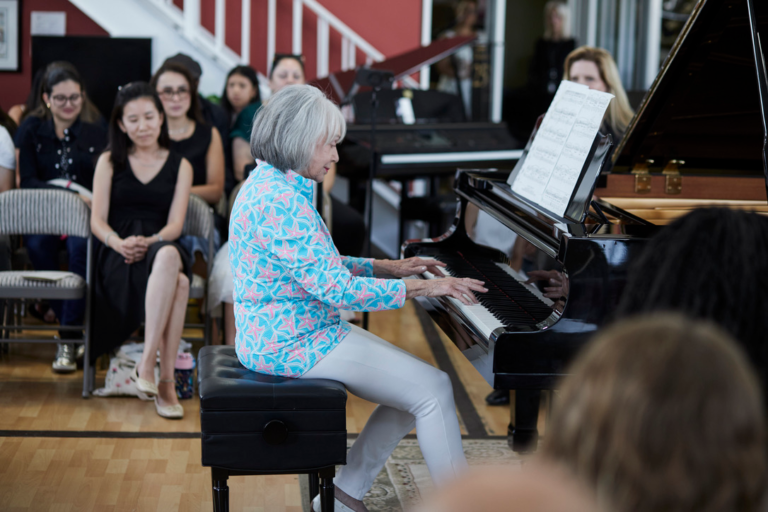
My first choice is always an acoustic piano. If you can get one, even an older upright, take it. Nothing else comes close. The sound is richer, the touch is more responsive, and your fingers learn proper technique naturally because the instrument responds to everything you do. Play softly and the sound is gentle. Play with weight and the room fills up. That kind of immediate, honest feedback trains your ear and your hands at the same time.
You do not need a grand piano and you do not need anything new. A well-maintained upright that is in tune, has working keys, and has hammers in decent shape is a wonderful instrument to learn on. Several of my students practice on uprights that are twenty or thirty years old and they sound lovely. New uprights start around $4,000 to $5,000, but the used market is where most families find their piano.
Used acoustic pianos can be a genuine bargain, and they can also be an expensive mistake. Last year, I found a used upright Steinway that I was very excited about. The owner said that the piano was in great shape but that she was moving and wanted it gone. The strings had been in at least six inches of water, and it would have taken thousands of dollars to restore it to a playable condition.
So if you are buying used, have it inspected by a piano technician before you commit. A free piano that needs $3,000 in repairs is not free. A used piano in good condition from a reputable dealer or a family you trust, on the other hand, may be one of the best purchases you ever make.
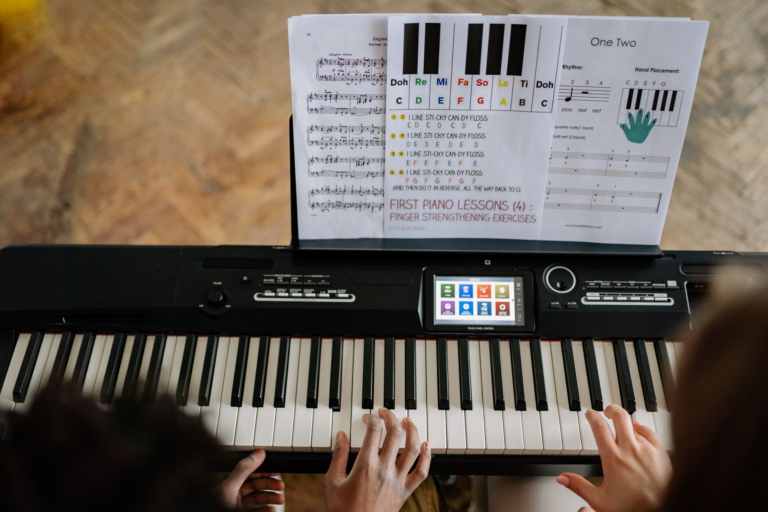
A good digital piano is the next best thing. Plenty of families do not have the room, the budget, or a living situation that allows an acoustic piano, and that is completely fine. The word “good” is doing considerable work in that sentence. Unlike acoustics, digitals never need tuning and hidden internal damage is not a concern. If it turns on and every key works, you are fine.
Don’t forget the accessories. You will need a sustain pedal early on. Most digital pianos include one, but check before you buy. You will also want a sturdy stand, because wobbly X-stands shift while you play and your hands quietly learn to compensate in ways that hurt your technique. And get a bench rather than a chair. A piano bench puts you at the right height and angle, which matters more than it sounds, because your posture determines what your arms and wrists are able to do.
And please don’t waste your money on toy pianos, mini keyboards, anything under 88 keys, unweighted keys, and any instrument whose speakers distort the moment you turn the volume up. A reasonable rule of thumb: if it was under $300 brand new and the box does not say “weighted” or “hammer action,” it is not going to work.
This is not snobbery. It is about not spending your practice time fighting your instrument.
If you are choosing between spending more on an instrument and spending more on lessons, and you have to pick one, get the instrument right first. A student with a decent digital piano and a lesson every other week will outpace a student with weekly lessons and a 61-key keyboard, because six days out of seven are spent at home, and home is where the technique is actually built.
Beyond the specifications, pick something you like. When the piano in your living room sounds good to your ears and feels right under your fingers, practice stops being an item on a checklist and becomes the part of the day you look forward to. That is the real reason the instrument matters, and no spec sheet captures it.
If you are in the Clearwater, Dunedin, or Palm Harbor area and you want a second opinion before you buy, send me the model number and I will tell you honestly whether it will serve you. You can also book a first lesson and we can talk it through in person.