
How to Support Your Child’s Piano Journey Without Becoming the Practice Police
Every piano parent has been there. Your child sits down at the bench, plays through their piece once (maybe), then announces they are done. You know the recital is in three weeks. You know what their teacher assigned. And before you know it, you have become the person standing in the doorway saying, “That did not sound like twenty minutes of practice to me.” Congratulations: you have just been promoted to Practice Police.
How you are involved matters far more than how much. The irony is that most parents who hover over practice do so out of real love and investment in their child’s progress. But the research is consistent on this point, and the line between supportive and controlling is thinner than you might think. Crossing it can actually undermine the very motivation you are trying to build.
The Research
A substantial body of research in music education has examined the role of parental involvement in children’s instrumental practice. One of the most influential studies, published in the Journal of Research in Music Education by Gary McPherson (2009), followed children from the beginning of their instrumental training and found that parental support falls into two broad categories: autonomy-supportive involvement and controlling involvement. Parents who asked open-ended questions (“What did you work on today?” or “How does that section feel to you now?”) produced children who practiced more consistently and with greater intrinsic motivation. Parents who issued directives (“Play that again” or “You need to practice your scales first”) saw short-term compliance but long-term disengagement.
This finding aligns with decades of Self-Determination Theory research by Deci and Ryan, which demonstrates that human motivation thrives when three basic psychological needs are met: autonomy (feeling in control of one’s actions), competence (feeling capable), and relatedness (feeling connected to others). When a parent micromanages practice, they may accidentally satisfy their own need for competence while undermining their child’s sense of autonomy. The child begins to associate piano not with personal achievement but with parental pressure.
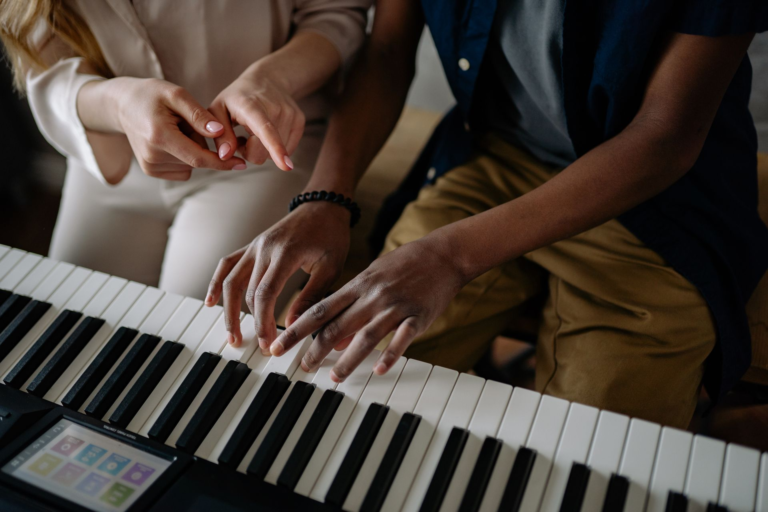
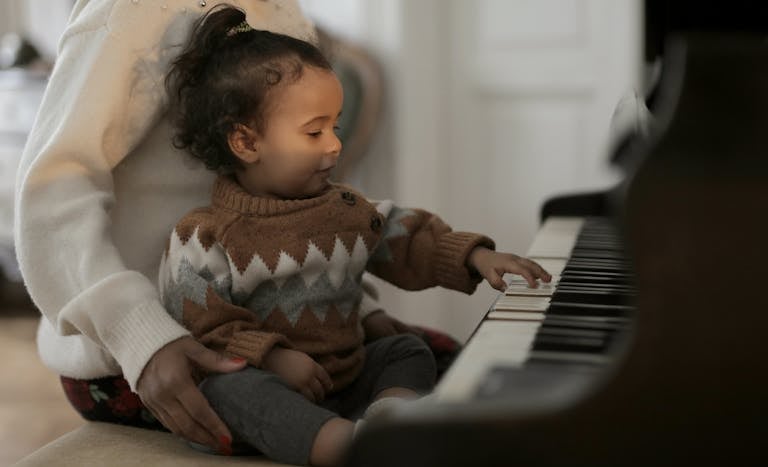
The most effective piano parents show real curiosity about what their child is learning, rather than monitoring every minute of practice.
Research by Susan Hallam at the UCL Institute of Education (2013) reinforces this distinction. Hallam found that children whose parents attended lessons, understood the teacher’s goals, and created a positive home environment for practice were significantly more likely to continue playing long-term. Crucially, “positive home environment” did not mean enforcing practice schedules with military precision. It meant having the piano in a welcoming space, showing interest in the music, and occasionally sitting nearby to listen. The children who quit earliest were not those whose parents were uninvolved. They were those whose parents were involved in the wrong way: turning practice into a battleground rather than an invitation.
A 2016 study in Psychology of Music by Creech and Hallam examined parent-teacher-student triads and found that the most successful outcomes occurred when parents acted as what the researchers called “responsive facilitators.” These parents communicated regularly with the teacher, helped maintain a practice routine without dictating its content, and expressed appreciation for effort rather than fixating on mistakes. The least successful dynamic was what the study termed the “directive” parent, who essentially tried to replicate the teacher’s role at home, often without the pedagogical training to do so effectively.
What This Means for Your Practice
If you recognize yourself in any of this, take heart. The fact that you care enough to be involved already puts you ahead. The adjustment isn’t about doing less. It’s about shifting how you’re involved. Instead of standing over the bench correcting wrong notes, try sitting in the next room and simply listening. When your child finishes, ask what they enjoyed playing most or what felt tricky today. Small conversational shifts like these tell your child two things. I trust you to own this, and I am here because I love hearing you play.
It also helps to reframe what “good practice” looks like. Many parents equate productive practice with a set number of minutes, which turns the kitchen timer into an adversary. Research consistently shows that focused, intentional practice of even ten or fifteen minutes produces better results than a distracted thirty-minute session spent watching the clock. If your child sits down, works carefully through a challenging passage, and gets up after twelve minutes feeling accomplished, that is a win. Celebrate it.
Your relationship with your child’s piano teacher matters here too. Stay in communication about what is being assigned and why, so you understand the goals without needing to enforce them yourself. When your child knows that you and their teacher are on the same team, they feel supported rather than surveilled. And on the days when practice just is not happening, remember that even professional musicians have off days. A missed practice session is not a crisis. A child who dreads sitting at the piano because it triggers a family argument is.
The most musical families I have worked with over the years share a common trait: the piano is woven into the fabric of home life rather than treated as homework. The parents play recordings during dinner. They ask their child to perform a piece for visiting grandparents, not as a test but as a gift. They notice when something sounds different and say so. That kind of involvement does not require a badge or a whistle. It just requires showing up with curiosity instead of a clipboard.