Why Old Keyboard Instruments Still Matter to How You Play
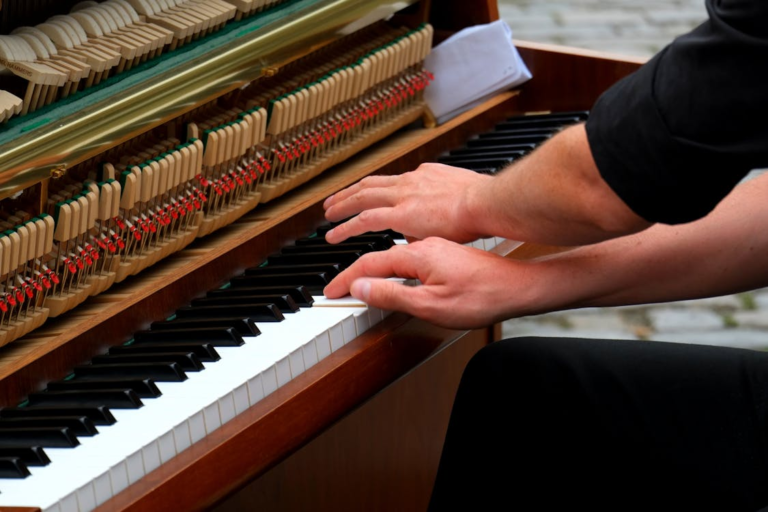
Most of us learn on one instrument. You sit down at a modern piano, you press a key, and a felt-covered hammer throws itself at three steel strings stretched across an iron frame under something like 20 tons of tension. That is the only keyboard experience many students ever have, and it quietly shapes what we think music is supposed to sound like.
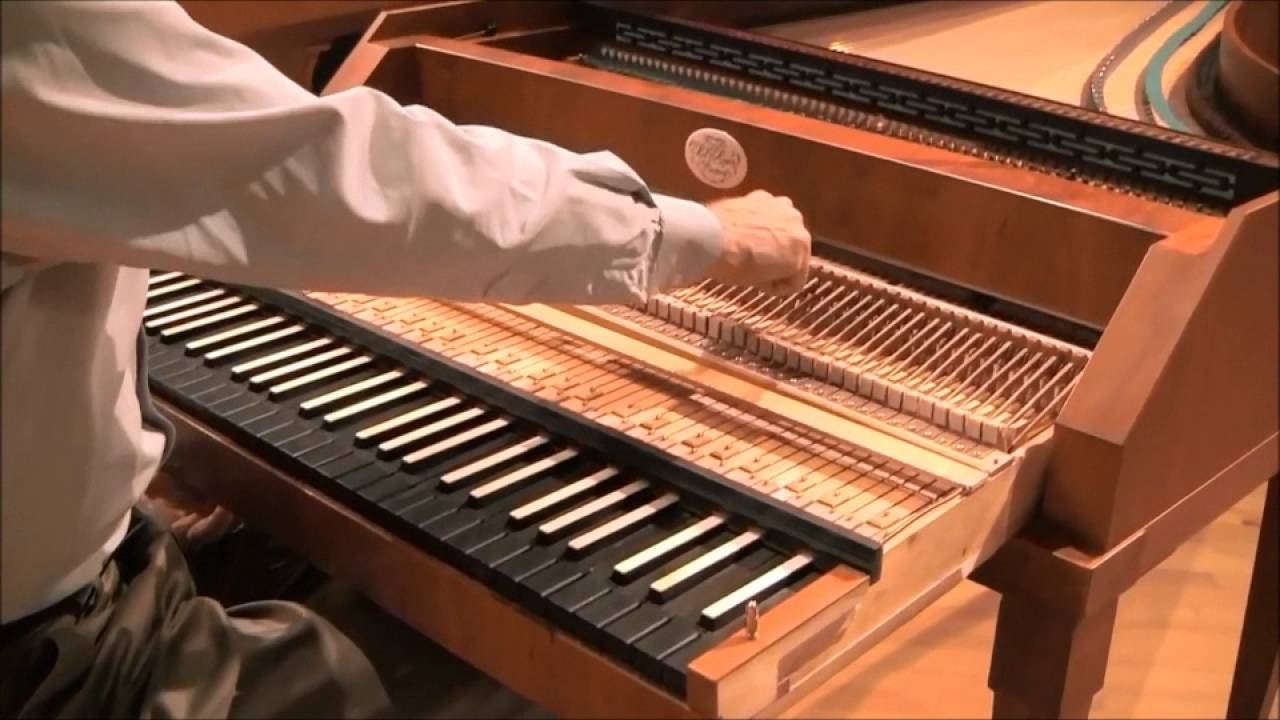
The piece I want you to see is a 48-minute compilation of documentary footage on the evolution of keyboard instruments. Start at 4:08, where David Schrader has the harpsichord open and is pointing out the jack, the slender wooden slide that carries the plectrum up past the string and plucks it. From there he works forward toward the modern piano. You can hear the difference between these instruments. That is the whole point. Reading about a harpsichord tells you very little. Hearing one answer a key tells you everything.
If you want to skip around, the compilation is stitched together from six sources. The Schrader demonstration runs from the beginning. Liberace turns up at 16:06 to explain the instruments in his own unmistakable way, which is more entertaining than it has any right to be, and clearer than you would expect. General keyboard history starts at 30:22, Cristofori’s first piano at 39:54, and a BBC Radio 3 segment on the fortepiano at 42:54.
The Clavichord Rewards a Sensitive Hand
The clavichord is the quietest keyboard instrument ever taken seriously. A small brass blade called a tangent rises and stays pressed against the string for as long as you hold the key. Because your finger is still connected to the sounding string, you control the volume, and you can even push slightly to bend the pitch, an effect the Germans called Bebung.
No modern piano does this. Once the hammer leaves the string, your finger has no further say. But the clavichord builds a habit: listening to the sound while it is still happening, not just at the moment of attack. That is exactly what separates a musical pianist from an accurate one. Bach kept a clavichord at home. That is where a great deal of the keyboard repertoire was actually worked out.
The Harpsichord Took Touch Off the Table
On a harpsichord, a small plectrum plucks the string. Press gently or press hard and you get very nearly the same volume. Composers who wrote for it could not shape a phrase by leaning into it, so they shaped it with everything else available, which meant articulation, ornamentation, the density of the texture, and switching between registers or manuals for terraced blocks of loud and soft.
This is why Bach on the modern piano is a real interpretive problem, and why your teacher fusses about your articulation in a two-part invention. In that music, the length of the note is the expression. If you play Baroque repertoire with a uniform legato and rely on dynamics to carry the phrase, you have removed the composer’s primary tool and substituted one he never had.
Cristofori Solved It, and Then Someone Added a Drum
Around 1700 in Florence, Bartolomeo Cristofori, who looked after instruments for the Medici court, built a harpsichord-shaped instrument with hammers instead of plectra. He called it a gravicembalo col piano e forte, a harpsichord that plays soft and loud. His action already included an escapement so the hammer fell away from the string, and a check to catch it on the way back. Three of his instruments survive.
Then things got strange for a while, which is the part of the video I did not expect. Viennese builders in the late 18th and early 19th centuries fitted their pianos with extra pedals and knee levers that produced sound effects. There was a bassoon stop that pressed parchment against the strings for a buzzing rasp, and there was the janissary or Turkish stop, which added a padded beater thumping the soundboard like a bass drum, a set of small bells, and brass strips rattling against the strings as a cymbal. Turkish military bands were the fashion of the moment, and this is the world Mozart’s Rondo alla Turca came out of. The instrument had a percussion section built into it.
What This Means for Your Practice
Start with repertoire you already play. If you are working on Bach, listen to the harpsichord section of the video, then go back to your piece and ask what you are doing with note lengths rather than with volume. Try shaping one phrase entirely through articulation, with no dynamic change at all, and see how much expression is actually available there. Most students are surprised.
If you are playing Mozart or early Beethoven, the relevant fact is that the fortepiano of that era had a light action, a shallow key dip, and a much faster decay than your instrument. The sound did not hang around. On a modern piano that means being deliberate with the damper pedal and keeping the left hand lighter than feels natural, because your instrument will sustain a texture into mud that would have been perfectly clear in 1785.
And for everything else, the useful takeaway is that the piano you practice on is not a neutral fact of nature. It is a specific set of engineering decisions made over three centuries, and every one of those decisions changed what composers could ask for. Knowing which instrument a piece was written for tells you a great deal about how to play it.
The Research
The claims here rest on standard organological scholarship rather than on a single study. Stewart Pollens’ work on the early pianoforte documents Cristofori’s surviving instruments and reconstructs his action in detail, and Edwin Good’s technological history traces the line from those instruments to the modern concert grand, including the Viennese period with its bassoon and janissary stops. Where I describe how an instrument responds under the hand, that comes from playing them and from the demonstrations in the video above.
References
Luis Luizz. (2016). Piano evolution, history of keyboard instruments. Compilation featuring BaroqueBand with David Schrader, Liberace, Soundfly, Gist Piano Center, and BBC Radio 3. Watch the video
Pollens, S. (1995). The Early Pianoforte. Cambridge University Press.
Good, E. M. (2001). Giraffes, Black Dragons, and Other Pianos: A Technological History from Cristofori to the Modern Concert Grand (2nd ed.). Stanford University Press.