Chopin’s Grande Polonaise Brillante: A Journey Through Technical Brilliance
Chopin’s Grande Polonaise Brillante from the Andante Spianato et Grande Polonaise Brillante, Op. 22 is a spectacular work showcasing both Chopin’s compositional genius and the virtuosic demands he placed on pianists.
The Grande Polonaise Brillante showcases both Chopin’s compositional genius and the virtuosic demands he placed on pianists.
The work came together in two stages, years apart. Chopin composed the Grande Polonaise Brillante in E-flat Major around 1830-1831, originally scoring it for piano and orchestra. He wrote the famous Andante Spianato introduction several years later, in 1834, creating what would become one of his most celebrated works. The piece represents Chopin’s deep connection to his Polish heritage, as the polonaise was a traditional Polish dance form that he elevated to concert hall sophistication. The work was dedicated to Baroness d’Este and premiered in Paris, where Chopin was establishing himself as both a virtuoso performer and composer.
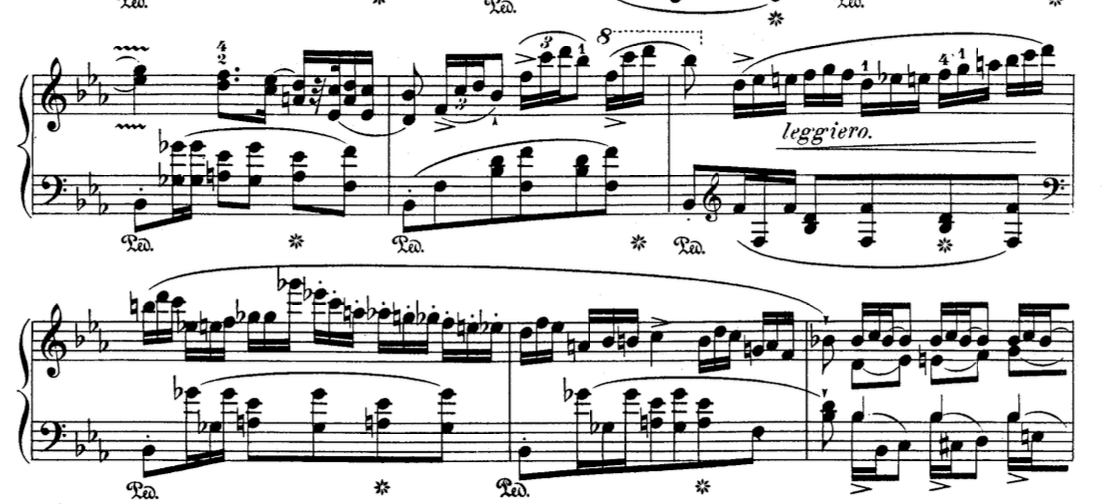
Technically, it asks for nearly everything a pianist has. The right hand features extended octave passages that require both strength and endurance, while the piece demands sophisticated hand independence as the left hand maintains the characteristic polonaise rhythm with its distinctive dotted rhythm on the second beat. Both hands must navigate large interval jumps with precision, and the sheer length of the work requires significant stamina. The piece also demands real dynamic control, from delicate passages to thundering fortissimos, without losing tonal beauty along the way. Chopin’s decorative passages and ornamentation require nimble fingers and careful attention to clarity.