It’s Never Too Late to Learn to Play the Piano
Every professional musician was once a beginner. The only difference between them and you is that they started. Your time is now.
If you’ve ever caught yourself humming along to your favorite song and thought, “I wish I could play that,” but then dismissed the idea because you’re “too old,” think again. Recent neuroscience research proves what music teachers have known all along. It’s never too late to learn a musical instrument.
Neuroscientist Norman Weinberger from UC Irvine notes that while it may be harder for the mature brain to learn an instrument, it’s absolutely possible. The brain maintains its ability to change throughout our lives. A recent study from MIT showed that older adults who began musical instrument training later in life experienced less age-related cognitive decline.
Adults bring advantages of their own. While children’s brains are naturally more plastic, adults bring unique strengths to music learning. Adults can see and hear things in music that completely escape children. Adult learners often have stronger motivation to practice and can apply analytical skills to understand musical concepts more quickly. A study by Jennifer Bugos at the University of South Florida found that adults between 60 and 85 who took piano lessons for six months showed significant improvements in memory, verbal fluency, information processing speed, and planning ability compared to those who didn’t take lessons.
The brain benefits hold up over years, not just months. Researchers from Kyoto University followed older adults who started playing instruments for the first time. After four years, those who continued practicing showed no decline in verbal working memory performance and maintained brain structure in key areas, while those who stopped experienced cognitive decline. They found that practicing an instrument may prevent or postpone cognitive decline associated with healthy aging.
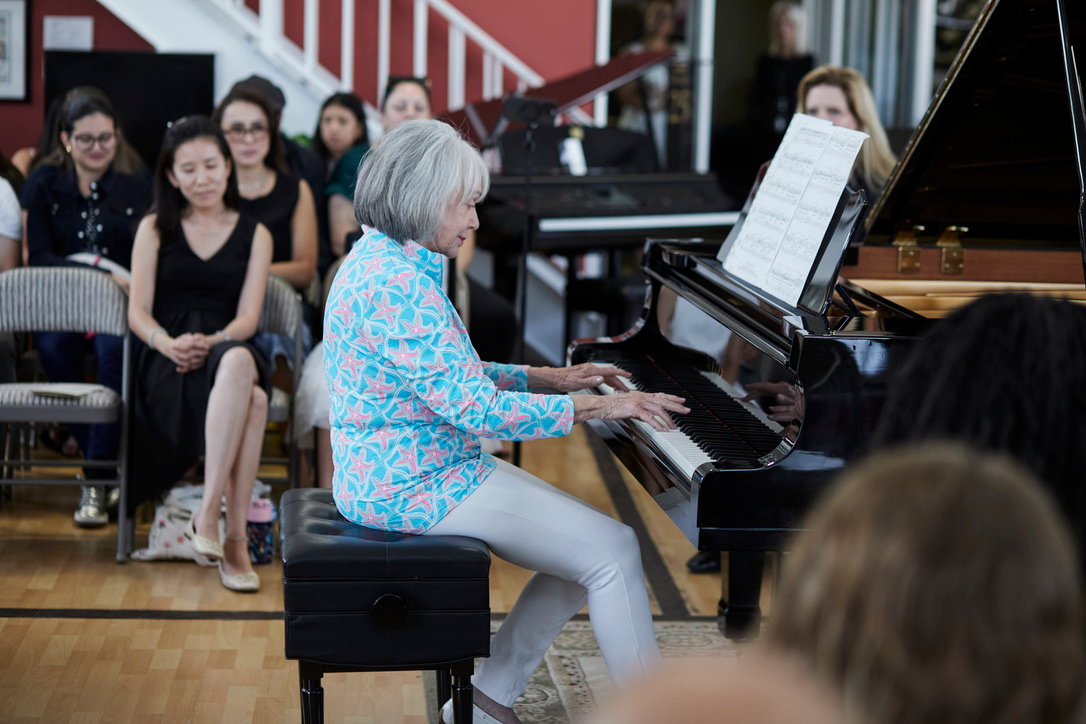
I’ve seen it in my own studio. I’ve had students who started piano in their eighties and surprised themselves by playing quite musically.
A few things to know before you start. The biggest hurdle is often our own expectations, not physical limitations or an aging brain. Adults tend to come in with unrealistic goals about what they can accomplish and how quickly, wanting to skip steps one through five and get to step six. Patience and persistence are your best friends. Choose the instrument that you actually want to play, not what you think a person like you should be playing (although I obviously think you should choose the piano). Have a few specific pieces in mind that you’d love to learn because they’ll keep you motivated through the challenging early stages.
Your age is not the deciding factor. Piano lessons give you an endless supply of pieces to learn, and that kind of ongoing challenge is exactly what supports healthy cognitive aging. Whether you’re 30, 50, 70, or beyond, you can begin today.